Home › Commercial Concrete Foundations and Footings
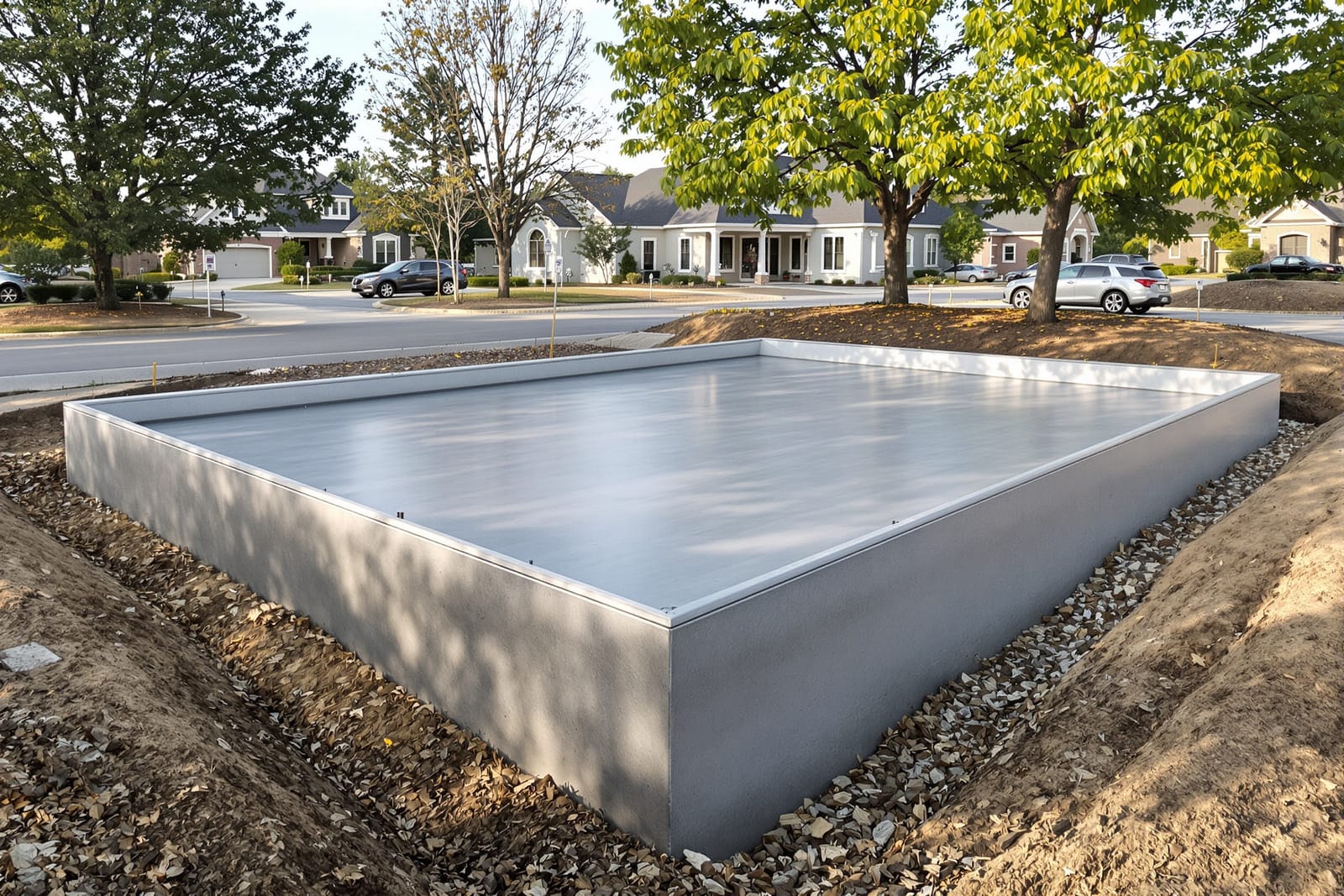
We install commercial concrete foundations and footings in Atlanta, GA for offices, retail centers, warehouses, and more. Our team follows engineered plans for depth, reinforcement, and anchor placement to support structural loads. From isolated footings to continuous foundations, we pour commercial foundations that keep your project on solid ground.
Superior Concrete Atlanta provides professional commercial concrete foundations throughout Atlanta, GA, Georgia and the surrounding area. Our licensed, insured crew delivers safe, clean, on-time work with a free estimate before anything begins. Call (470) 748-3052 or request your free quote.
Commercial Concrete Foundations Built for Atlanta Properties
Commercial concrete foundations in Atlanta have to do more than just hold up a building. They have to handle clay soils that swell and shrink, big temperature swings between August heat and winter cold snaps, and heavy rain events that can saturate the ground. Superior Concrete Atlanta designs and installs foundations and footings specifically for these local conditions so your investment stays stable for decades.
We plan every project around how your building will actually be used. A warehouse with rack loads, a medical office with sensitive equipment, and a retail center with high foot traffic all put different demands on the foundation. Our team reviews your structural drawings, load paths, and soil information, then recommends the right footing and foundation system instead of using a one-size-fits-all approach.
Because we are a local contractor, we also factor in Atlanta permitting requirements, inspection schedules, and utility coordination. This helps avoid delays at the slab or footing stage, which is often where commercial schedules slip if planning is weak.
How We Design Commercial Foundations and Footings
A strong commercial foundation starts with a realistic understanding of the soil under your project. In most Atlanta and metro-area sites, we are dealing with red clay that holds water and can move as moisture changes. We coordinate with your geotechnical engineer or help you arrange soil testing if it has not been done. That report drives crucial decisions like footing depth, width, and reinforcement.
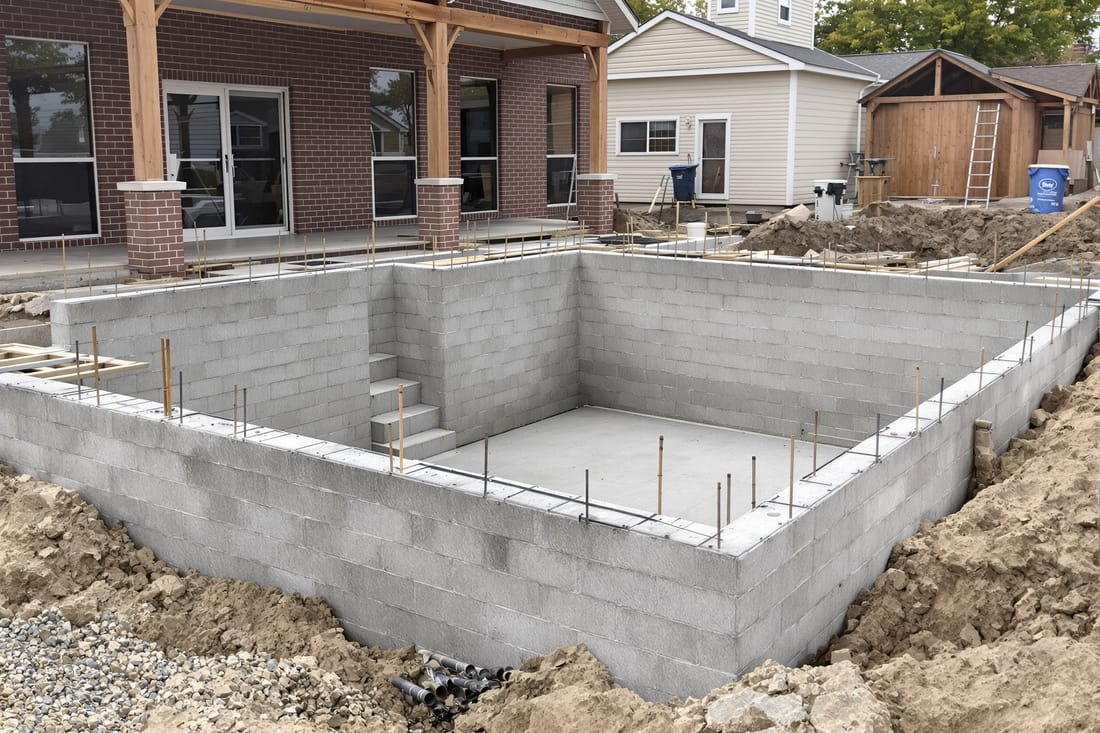
From there, Superior Concrete Atlanta works with your architect and structural engineer to finalize the foundation plan. For typical low-rise commercial buildings, this often includes continuous strip footings under load-bearing walls, isolated spread footings under columns, and a slab-on-grade or structural slab above. For heavier industrial and distribution projects, we may be looking at thicker mats or grade beams and more robust reinforcement to support concentrated loads.
We also address details that directly impact long-term performance, like vapor barriers to control moisture under slabs, insulation under conditioned spaces when needed, and proper joint layout to manage shrinkage and movement. By resolving these design items before mobilizing to site, we reduce change orders and construction conflicts once concrete work begins.
Our Commercial Foundation Construction Process
Once designs are set and permits are in place, we begin with careful layout. Using survey control points, our crews mark footing lines, slab edges, column locations, and elevations so the finished foundation matches your steel and framing plans. Accuracy at this stage prevents misaligned anchor bolts and costly corrections later.
Excavation comes next. In clay-based Atlanta soils, it is critical to dig to the proper depth and bearing elevation without over-excavating, since refilled areas do not carry load as well as undisturbed soil. Where soft or unsuitable material is found, we coordinate with your engineer on undercut and replacement with compacted structural fill. Compaction tests are often part of this step on commercial sites.
Formwork and reinforcement follow. We install wood or metal forms to create clean edges and correct foundation heights. Rebar is tied and supported on chairs to maintain the specified cover. In continuous footings and grade beams we make sure lap splices, bar sizes, and bar counts match the structural drawings. At this stage we also set anchor bolts, embed plates, plumbing sleeves, and conduits so that later trades can attach to the concrete without risky drilling or cutting.
Concrete placement is scheduled for early morning whenever possible to work with Atlanta temperatures and reduce rapid surface drying. We use vibrators to consolidate the mix, remove voids around rebar, and achieve strong bond with embeds. Surface finishing is matched to the function of the space, like flatter slabs for racked warehouses or broom finishes for exterior service areas.
Concrete Mixes, Reinforcement, and Options
Not all commercial concrete foundations use the same concrete or reinforcement. For many Atlanta commercial projects we specify mixes in the 3,000 to 4,000 psi range, but heavier loading, high-traffic areas, or specific engineering requirements can push that higher. We also consider admixtures that improve workability, set time, or durability. For example, when a pour must happen during warmer months, we may use a retarder to manage set time in August heat.
Reinforcement is another major design choice. Most commercial foundations rely on conventional rebar grids, but some applications benefit from additional reinforcement like fiber-reinforced concrete to control surface cracking, especially in large slab areas. For industrial slabs we may use heavier rebar mats, doweled control joints, and thicker sections where heavy forklifts will turn or where rack legs will bear.
You also have options related to moisture and long-term performance. Vapor barriers under conditioned spaces help protect interior finishes and floor coverings. Where there is concern about water near foundations, we can incorporate foundation drains, sump pits, or sloped backfill to move water away. Superior Concrete Atlanta explains where each option makes sense in relation to your specific building, use, and budget so you only pay for value that you will actually use.
Cost Factors for Commercial Concrete Foundations in Atlanta
Commercial concrete foundations represent a significant portion of a building budget, and the actual cost depends on more than just square footage. Soil conditions are a major driver. Sites with poor bearing capacity, deep fill, or high groundwater may require deeper footings, more reinforcement, or additional drainage measures. Sites with good native soils can often use more straightforward foundation systems.
The complexity of the foundation layout also affects cost. Simple rectangular buildings with regular column grids are more economical to form and pour than structures with many jogs, level changes, or specialty pits. Likewise, heavily loaded areas like equipment pads, elevator pits, and thickened slabs add to material and labor requirements.
Schedule is another driver. Accelerated timelines, night pours in busy urban areas, or complex phase sequencing can increase labor costs. Superior Concrete Atlanta works with your general contractor and project team to sequence footing and slab placements in a way that supports the overall schedule while avoiding unnecessary overtime.
Before you commit to a budget, we recommend sharing your preliminary plans and any geotechnical reports. We can provide a foundation cost range that reflects real-world Atlanta conditions and common requirements from local inspectors, rather than rough guesses that lead to surprises later.
Common Foundation Issues We Help Prevent and Solve
Many commercial foundation problems in the Atlanta area trace back to poor preparation, rushed work, or ignoring how local clay soils behave. Typical issues include differential settlement, cracked slabs from inadequate joints or reinforcement, and water intrusion near foundation walls.
Superior Concrete Atlanta addresses these risks through upfront planning and quality control. Proper subgrade compaction and verification help prevent soft spots that can lead to uneven settlement. Thoughtful joint layout, correct rebar placement, and appropriate concrete mixes work together to reduce uncontrolled cracking. Around building perimeters, we pay attention to grading and drainage so that surface water flows away from the structure rather than toward it.
If you already have a foundation problem on an existing commercial property, we can help evaluate repair options. This might involve new interior or exterior footings, thickened slabs in critical areas, or structural overlays designed in coordination with your engineer. Because we regularly install new foundations, we understand where shortcuts create problems and how to correct them in a practical way.
Scheduling, Seasons, and Why Local Experience Matters
Atlanta’s climate allows commercial concrete foundation work year-round, but timing still matters. Spring and fall usually offer the most stable temperatures and fewer afternoon storms, which is ideal for large slab pours that demand consistent conditions. In summer we plan earlier morning placements, adjust mixes for heat, and pay close attention to curing so surfaces do not dry too quickly. In winter, cold snaps require protection of fresh concrete and sometimes adjusted admixtures.
Lead time is important, especially for larger projects. For most commercial foundations we recommend engaging Superior Concrete Atlanta as soon as schematic foundation plans and soil data are available. This allows us to flag constructability issues, plan efficient pour sequences, and secure the manpower and equipment your schedule will require.
Working with a local contractor also simplifies inspections and coordination. We are familiar with Atlanta and surrounding county building departments, common inspection expectations for footing and slab work, and typical turnaround times. Our goal is to move your project from layout to passed foundation inspections without unnecessary delays, so that steel, framing, or modular units can follow on schedule.